

Forwarding Rules - Filter and Route Webhooks
Filter and route webhooks based on request body, JSON paths, URL query parameters, URL path, and IP address. Precisely control which webhooks reach each destination.
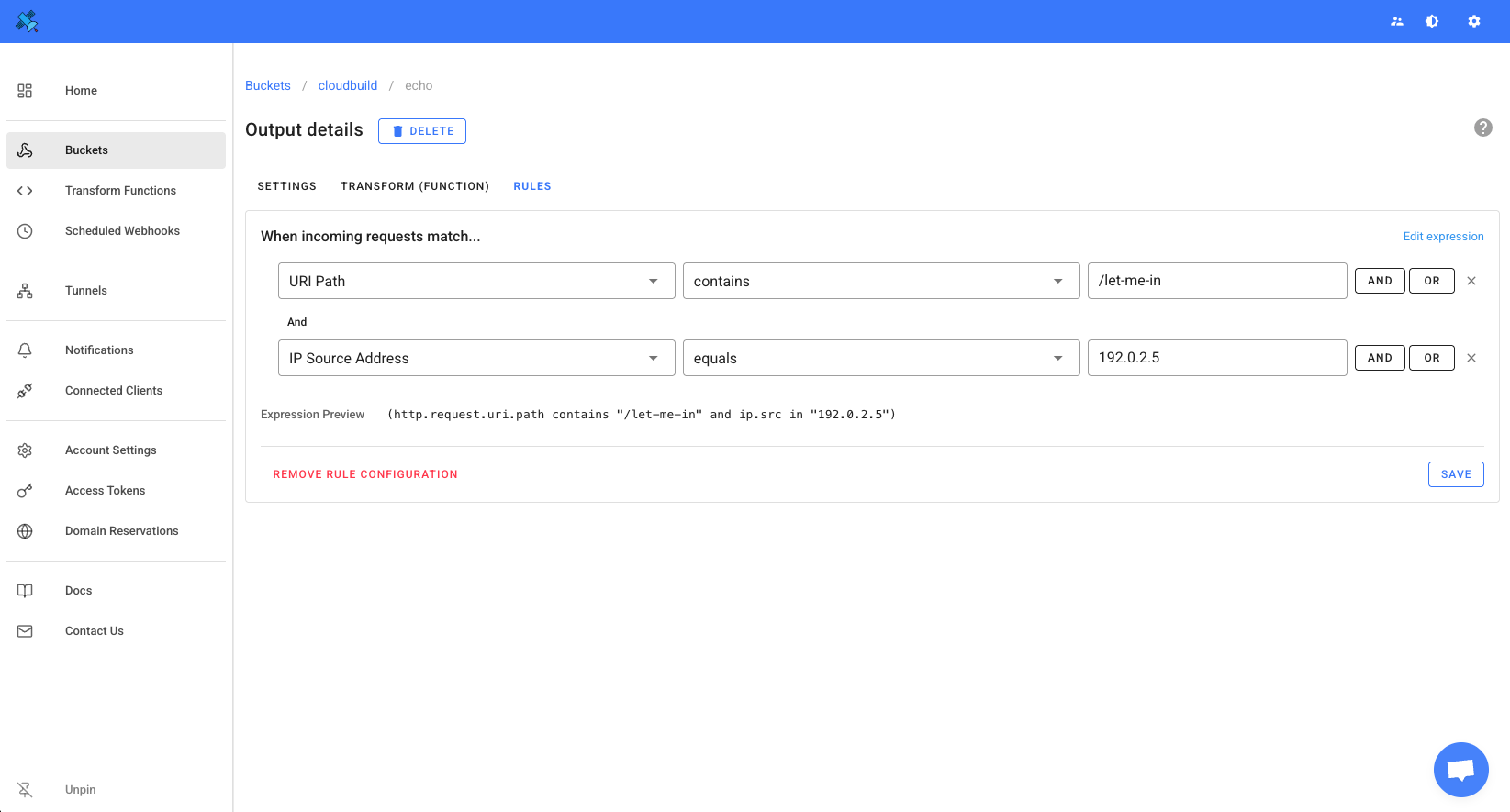
Take full control over your webhook routing with powerful forwarding rules. Filter incoming webhooks based on multiple criteria and ensure only the relevant requests reach each destination.
Supported Filtering Options
Webhook Relay forwarding rules support filtering by:
- Request Body - Match webhooks based on the raw request body content
- JSON Paths - Use JSON path expressions to filter based on specific fields in JSON payloads
- URL Query Parameters - Filter based on query string parameters in the webhook URL
- URL Path - Route webhooks based on the URL path patterns
- IP Address - Allow or block webhooks from specific IP addresses or ranges
How to Configure Forwarding Rules
Forwarding rules can be configured in the Webhook Relay dashboard:
- Navigate to your Bucket Details
- Select the Output you want to configure
- Click on Rules to add or manage forwarding rules
Each output destination can have its own set of rules, allowing you to route different webhooks to different endpoints based on their content or source.
Use Cases
Filter by Event Type
Use JSON path filtering to route webhooks based on event types. For example, send only order.completed events to your fulfillment service while payment.failed events go to your support system.
Security Filtering
Restrict webhook processing to known IP addresses, ensuring only trusted sources can trigger your workflows.
Environment Routing
Use URL path or query parameter filtering to route webhooks to different environments (staging, production) based on the incoming request.
Selective Processing
Combine multiple rules to create sophisticated routing logic. For example, only forward webhooks that contain a specific customer ID in the JSON payload and come from an allowed IP range.
Benefits
- Reduce Noise - Only forward webhooks that matter to each destination
- Improve Security - Block unwanted or suspicious requests at the relay level
- Simplify Architecture - Handle routing logic in Webhook Relay instead of your application code
- Save Resources - Avoid processing irrelevant webhooks in your backend services