

Test Dropbox Webhooks Locally
Test Dropbox webhooks locally and receive them on localhost without deploying. Inspect the real payload, forward to your handler, and verify the signature.
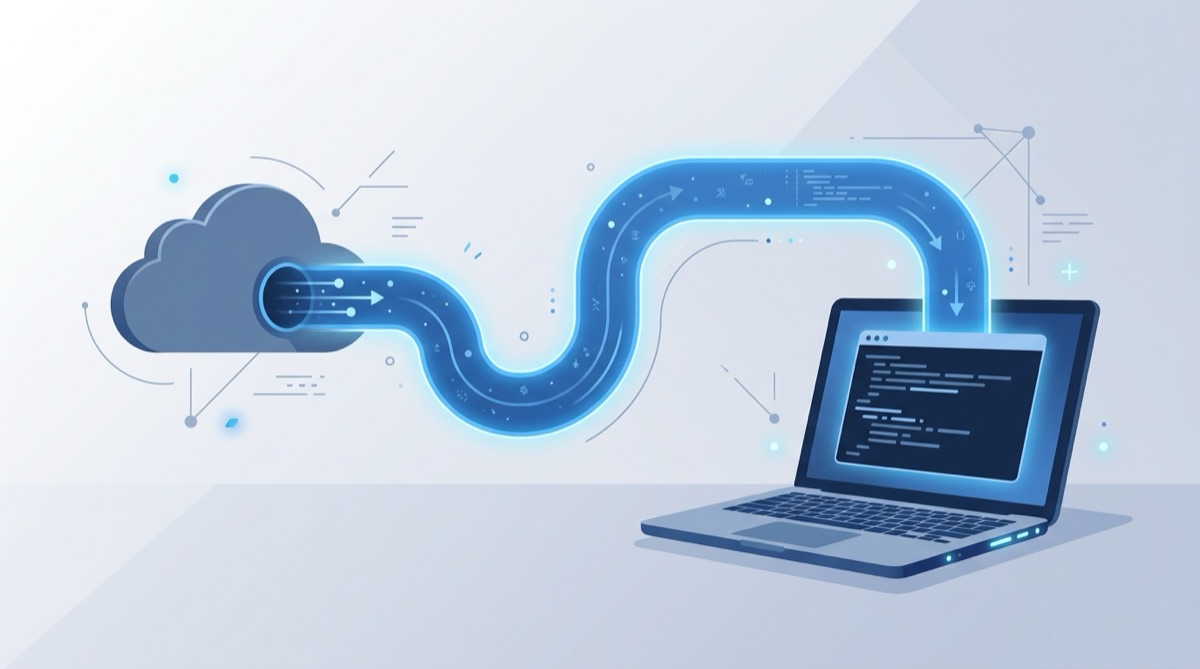
You are building a Dropbox integration and you need to watch your handler react to a real event. The problem hits immediately: Dropbox will only POST to a public URL, and your handler is running on localhost:8080. Dropbox has no way to reach it.
The usual workarounds are slow. Deploying to a staging environment for every code change kills your iteration speed. Copying a sample payload out of the docs into curl gives you a guess at the real request, not the exact headers and body Dropbox actually sends. What you really want is to test Dropbox webhooks locally — real events, hitting your local handler, on a URL that does not change every time you restart.
This guide shows how to do exactly that.
Why testing Dropbox webhooks locally is tricky
A webhook is just an HTTP request that Dropbox sends to a URL when something changes. Dropbox lives on the public internet; your dev machine usually does not. It sits behind a router, a corporate firewall, or both, with no public IP and no inbound ports open.
So you need something in the middle: a public endpoint Dropbox can hit that relays each request down to your laptop without you opening a single firewall port. That is what Webhook Relay does — and unlike a random tunnel URL, the endpoint is stable, so you configure Dropbox once and never touch it again.
Step 1: Inspect the real payload with Webhook Bin
Before you write any handler code, find out what Dropbox actually sends. Open the free Webhook Bin — no signup — and you get an instant public URL.
- Copy the Webhook Bin URL.
- In the Dropbox App Console, add your URL under Webhooks. Dropbox first sends a verification GET with a
challengequery parameter that you must echo back. - Trigger a real event and inspect the captured request.
You will see the full body and every header. Dropbox verification is a GET with a challenge query parameter — respond with the challenge value (and X-Content-Type-Options: nosniff). Change notifications then arrive as POSTs that simply list the accounts with changes; you call the API to fetch the actual deltas.
Now you know the exact shape of the data before writing a line of code. For more on this approach, see How to test webhooks and What is a webhook.
Step 2: Forward the events to localhost with the relay agent
Once you know the payload, route those same events into your local handler. Sign up for Webhook Relay, install the relay agent (CLI or Docker), and create a bucket — say dropbox. The bucket gives you a stable public input endpoint.
Start forwarding to your local server:
relay forward --bucket dropbox http://localhost:8080/webhook
The agent opens an outbound connection to Webhook Relay and streams every incoming request down to http://localhost:8080/webhook. Because the connection is outbound, there are no firewall ports to open and no public IP needed — this works from your laptop, behind a corporate proxy, or inside a Kubernetes cluster. Running in Docker? The same command works in the official webhookrelay/webhookrelayd image. Full details are in the localhost forwarding docs.
Now point the Dropbox webhook at your Webhook Relay endpoint (or create it there from the start), trigger an event, and watch it arrive on localhost.
Dropbox-specific configuration and quirks
A few Dropbox details worth knowing:
- Verification GET: echo the
challengequery param or the webhook won't enable. - Thin notifications: a POST only tells you which accounts changed — call the API for the deltas.
- Signature:
X-Dropbox-Signatureis HMAC-SHA256 of the raw body with your app secret.
Step 3: Verify the Dropbox webhook signature
Two steps. First the verification GET: echo back the challenge query parameter as plain text. Then each notification POST is signed — Dropbox computes an HMAC-SHA256 (hex) of the raw body with your app secret and sends it in the X-Dropbox-Signature header. Recompute over the raw body and compare in constant time.
To sanity-check an HMAC implementation, paste a captured body, your secret, and the received signature into the free HMAC signature verifier. For language-specific code and the common pitfalls (reading the body after a JSON parser has already consumed it, timing-safe comparison), read Verify a webhook signature.
Replay and iterate
This is where local development gets fast:
- Replay from Webhook Relay — past requests are stored on your bucket, so you can resend a captured event against your handler without touching Dropbox at all.
- Iterate on your handler by editing code and replaying the same delivery until it behaves correctly. No commits, no pushes, no deploys just to test a single code path.
- Keep
relay forwardrunning while you work — events stream straight tolocalhostas you trigger them in Dropbox.
Because the Webhook Relay endpoint is stable, you can stop and restart the agent, reboot your machine, or come back next week — the Dropbox configuration never needs to change.
Get started
- Inspect the real payload in the free Webhook Bin — no signup needed.
- Create a Webhook Relay account, install the agent, and run
relay forward --bucket dropbox http://localhost:8080/webhook. - Point your Dropbox webhook at the stable endpoint, trigger an event, and watch it hit
localhost.
You will be testing real Dropbox events against your local handler in a few minutes — no deploys, no open firewall ports, and a URL you configure exactly once.