

Send a Webhook to Datadog: Post Events From Any Source
Send any webhook to Datadog. Transform an incoming webhook into a Datadog Events API request in flight to post events and alerts — no glue server.
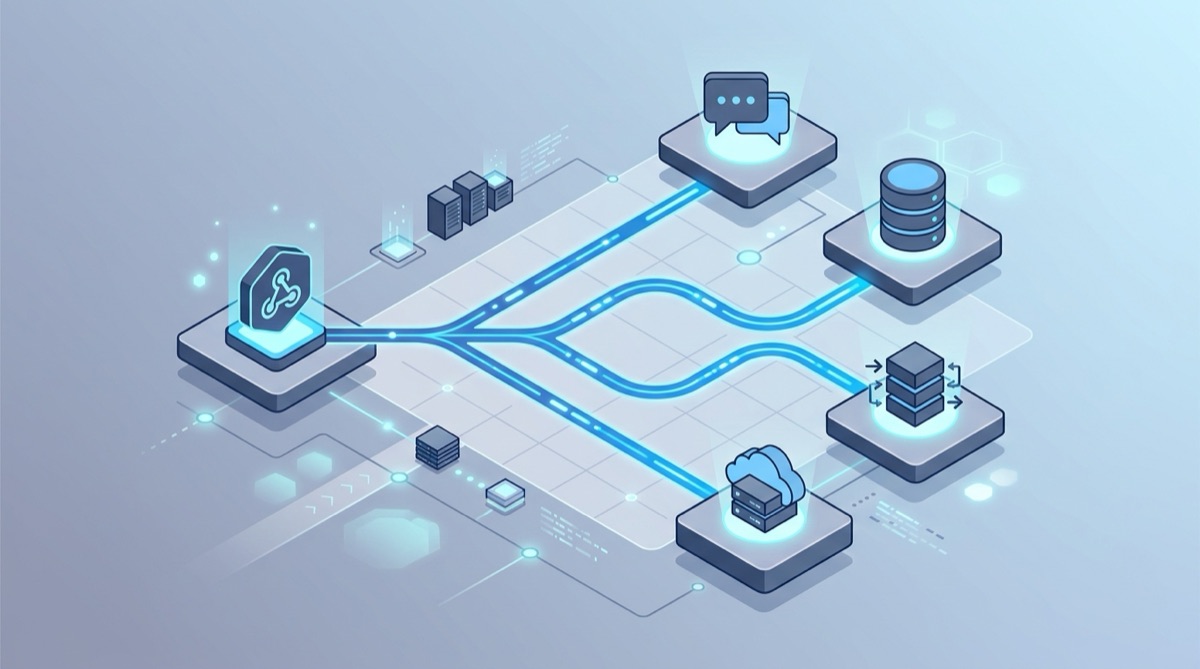
You want events from across your stack — deploys, signups, failed payments, CI runs — to show up on your Datadog Events stream so you can overlay them on dashboards and alert on them. The problem: the Datadog Events API expects a specific JSON body and the API key in a header, and the webhook your source sends never matches that shape.
Webhook Relay sits in the middle. It receives the incoming webhook at a stable public URL, transforms the payload into the Datadog Events API format, and delivers it — no glue server, no Lambda, no maintenance.
How it works
- Your source service POSTs its webhook to a Webhook Relay endpoint.
- A transformation function maps the payload into a Datadog Events API request.
- Webhook Relay forwards it to the Datadog Events API with your API key, and the event appears in Datadog.
Step 1: Get a Datadog API key
In Datadog, go to Organization Settings → API Keys and copy (or create) an API key.
Step 2: Create a Webhook Relay output to the Events API
Create a bucket with a public input, then add an output pointing at the Datadog Events API:
- Output destination:
https://api.datadoghq.com/api/v1/events(usedatadoghq.eufor the EU site) - Headers:
DD-API-KEY: <your-api-key>Content-Type: application/json
Step 3: Add a transformation function
Attach a function that maps the incoming webhook into a Datadog event:
local body = json.decode(r.RequestBody)

local event = {
  title = body.title or "Event from webhook",
  text = body.message or r.RequestBody,
  alert_type = body.severity or "info",        -- info | warning | error | success
  tags = { "source:webhook-relay", "service:" .. (body.service or "unknown") }
}

r:SetRequestBody(json.encode(event))
Step 4: Point your source at the URL and test
Configure your source service's webhook to point at the Webhook Relay public URL. Trigger an event — or replay one from the Webhook Bin — and it appears on your Datadog Events stream within seconds. The Webhook Relay logs show Datadog's response if the mapping needs tweaking.
Going further
- Fan out: also send the event to PagerDuty, Slack or archive it to S3 with multiple destinations.
- Filter noise: use forwarding rules so only the events you care about reach Datadog.
- Inspect first: see the raw payload in the Webhook Bin before writing the mapping.
Get started
Create a free Webhook Relay account and turn any webhook into Datadog events — no servers to run. New to webhooks? Start with what is a webhook and how to transform webhooks.